
Current Projects
GreenClub’s project teams work on community-based sustainability solutions by combining systems thinking, design thinking, and technical development to deliver real tools and research for stakeholders. Across subteams, we collaborate to understand complex food-waste challenges, prototype solutions, and communicate actionable outcomes through reports and presentations.


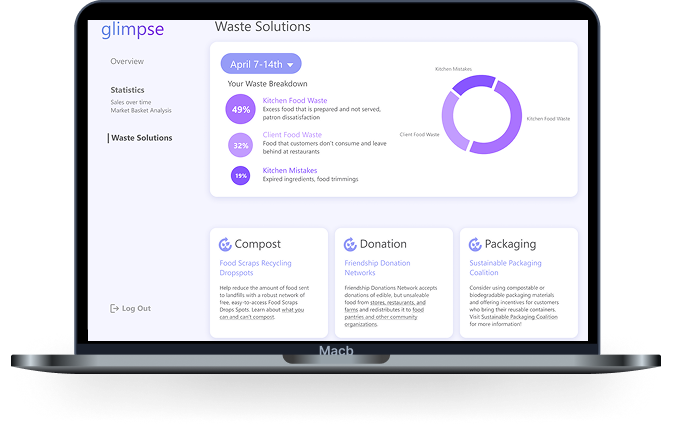
Glimpse is a food waste tracking system designed to help small and mid-sized restaurants measure and reduce waste without expensive, complex infrastructure. By combining an IoT scale with a lightweight analytics dashboard, Glimpse makes waste visible through a simple, reliable metric: total food waste weight. This lowers the operational burden on kitchen staff while giving businesses a clear baseline to improve sustainability and efficiency over time.
Components
The software subteam focused on building a working proof-of-concept system that connects the full pipeline end-to-end. This included developing a new frontend based on updated Figma designs, creating a backend API from scratch, and ensuring the hardware could send data to the backend in a clean standardized format. A major part of the work was integrating everything together (frontend → backend → hardware) and testing that the whole system works reliably.
The hardware subteam worked on building the physical prototype of Glimpse, proving that the IoT weight-sensing system can function in real conditions. They refined the previous design, used CAD + 3D printing to create casing, soldered components, and programmed the Arduino to read sensor measurements. The device was also built to communicate over WiFi with the backend API so the dashboard can display the collected weight data. Moving forward, the team plans to upgrade limitations like casing quality, strain gauge range, and battery reliability.
The business subteam focused on shaping Glimpse’s value proposition and making sure the project can be communicated clearly to stakeholders. They organized insights from past interviews and outreach efforts, tracked contacts and follow-ups, and helped translate technical progress into a compelling narrative. As the prototype became more tangible, their work shifted from abstract strategy to messaging grounded in a real system people can understand and interact with. This positioned the team to support pitching, partnerships, and external communication with more clarity and confidence.
The design subteam intentionally narrowed the dashboard scope to prioritize a strong, testable MVP instead of implementing every feature at once. Rather than visualizing many dimensions of waste (like cost and environmental impact), they centered the interface around one reliable metric: total weight of food waste produced. This made the system easier to build, test, and validate while keeping the dashboard closely tied to what the IoT scale actually measures. The team used Figma to collaborate closely with the software and hardware teams to ensure the interface accurately reflected real data and worked smoothly end-to-end.
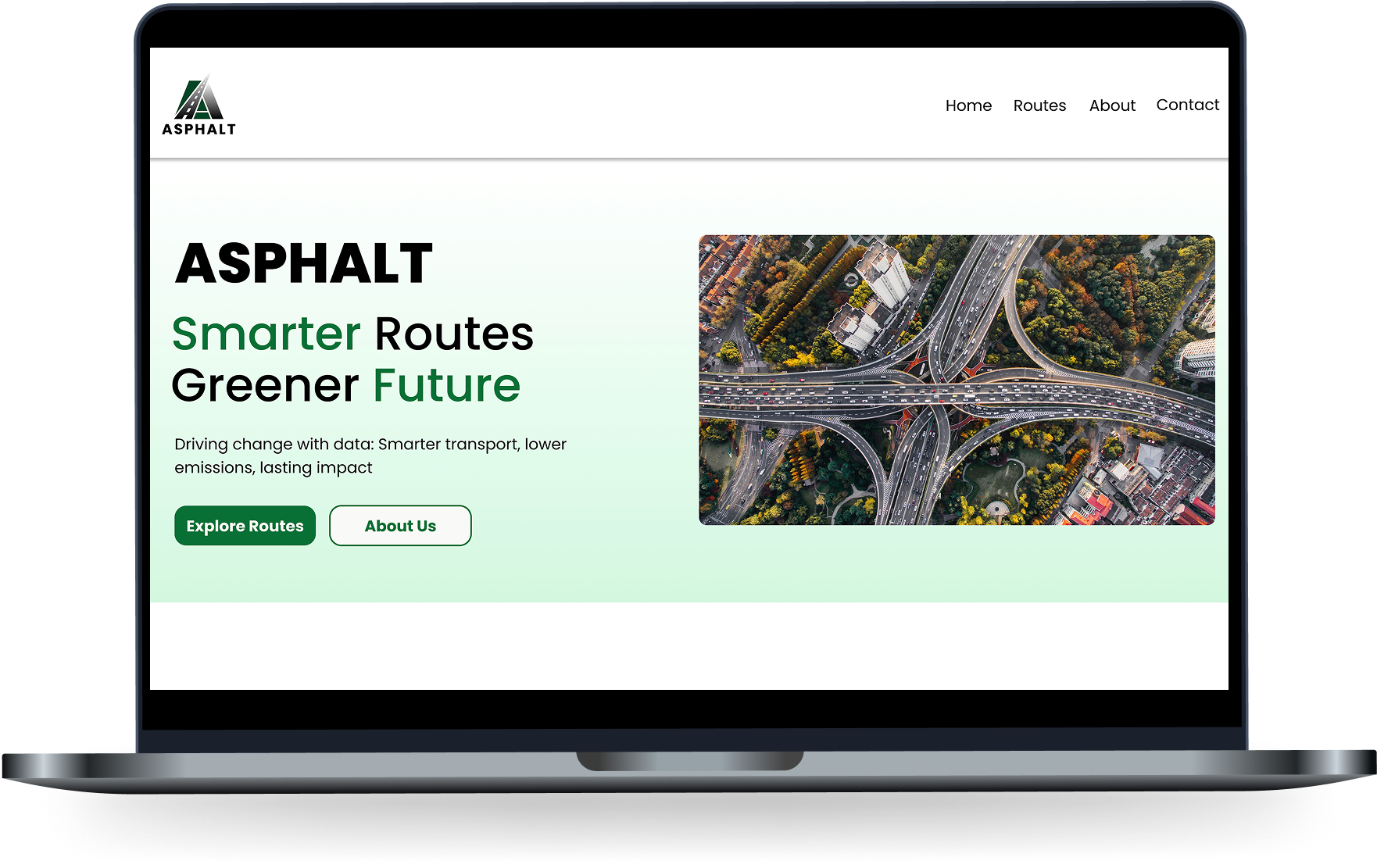
pathOS (Asphalt) is a route-optimization platform that helps institutions reduce the greenhouse gas emissions associated with transporting food waste. It focuses on Scope 3 transportation emissions that are often missing from institutional climate accounting, especially across complex systems like K–12 schools. By improving route planning visibility and enabling comparison between current vs. optimized routes, pathOS supports more data-driven sustainability decisions.
Components
This component focuses on improving food-waste transportation routes using optimization logic that can be applied at the institutional level. This year, the system prioritizes distance-based routing so the platform can run end-to-end reliably and produce usable route comparisons. The next step is incorporating more realistic emissions factors—like load changes over time—without making the tool too complex to use. The goal is to keep route improvements interpretable and actionable for real operators.
This component is the deployed site experience that connects user inputs to routing outputs through a complete frontend/backend pipeline. This year, the project consolidated older code into a cleaner repo and linked key endpoints into a functional MVP that’s easier to maintain. It also addressed scaling limits by moving routing from a rate-limited public service to hosted routing infrastructure that supports larger route sizes. The result is a working foundation future teams can extend.
This component makes sure the tool doesn’t feel like a black box by clearly communicating what changed between a current route and an optimized route. The design approach emphasizes clarity, transparency, and collaborative decision-making so non-technical stakeholders can trust and interpret outputs. It also keeps the experience aligned with real constraints, so the tool supports operations rather than “idealized” solutions. Ultimately, it builds credibility by making assumptions visible.
This component focuses on the real-world systems pathOS is built for—especially public institutions where food waste volume is high and logistics decisions are repeatable. The motivation is that transportation emissions are often overlooked, even though institutions can directly influence routes and pickups. This year, outreach was intentionally limited while the product matured, so stakeholder time wasn’t wasted on an unstable prototype. A key next step is returning to validation once the MVP is more polished and targeted.

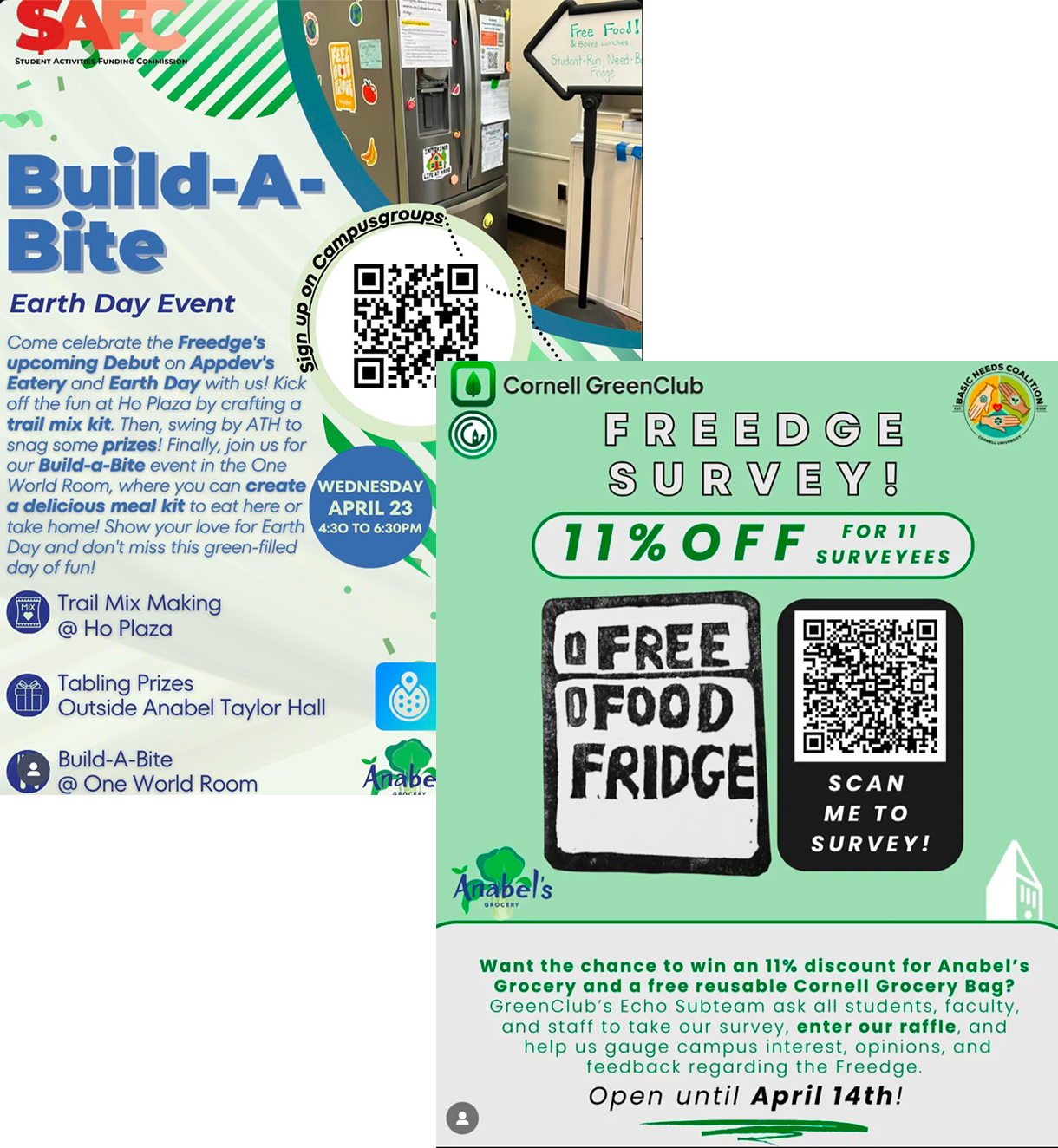
Echo is a research-and-design project addressing the connection between food waste and undergraduate food insecurity at Cornell. This semester, the team compiled a Food Insecurity Report from stakeholder interviews, literature review, and survey data, then used those findings to re-map stakeholders and launch a design-thinking process with campus partners. The goal is to translate data into collaborative educational “nudges” that strengthen cooking self-efficacy and reduce food waste, with pilot initiatives planned for release next semester.
Components
Echo expanded research beyond food waste alone by studying undergraduate food insecurity and the role of financial incentives in motivating behavior change. The team conducted literature review and analyzed survey data, compiling findings into a Food Insecurity Report to clarify where and why food insecurity occurs on campus and how it intersects with food waste.
Findings from the report informed a stakeholder re-analysis focused on identifying high-power, high-interest campus partners. Echo then began a second outreach phase to establish collaborations and align goals with organizations that can influence student behaviors and help launch an educational initiative.
Echo translated research into pilot concepts through structured design thinking with partners, especially Anabel’s Grocery. The team is developing targeted “nudges” that address food waste and food insecurity together, starting with two initiatives: short-form “cook with me” videos and a flexible recipe bank intended to be practical, high-impact, and easy to distribute.
Because outreach and coordination happened late in the semester, Echo is prioritizing early follow-ups to confirm distribution channels and divide responsibilities for content creation and promotion. Next steps include coordinating partners around the recipe bank, sharing production work for short-form media, and confirming a distribution pathway so pilots can launch at the beginning of next semester.

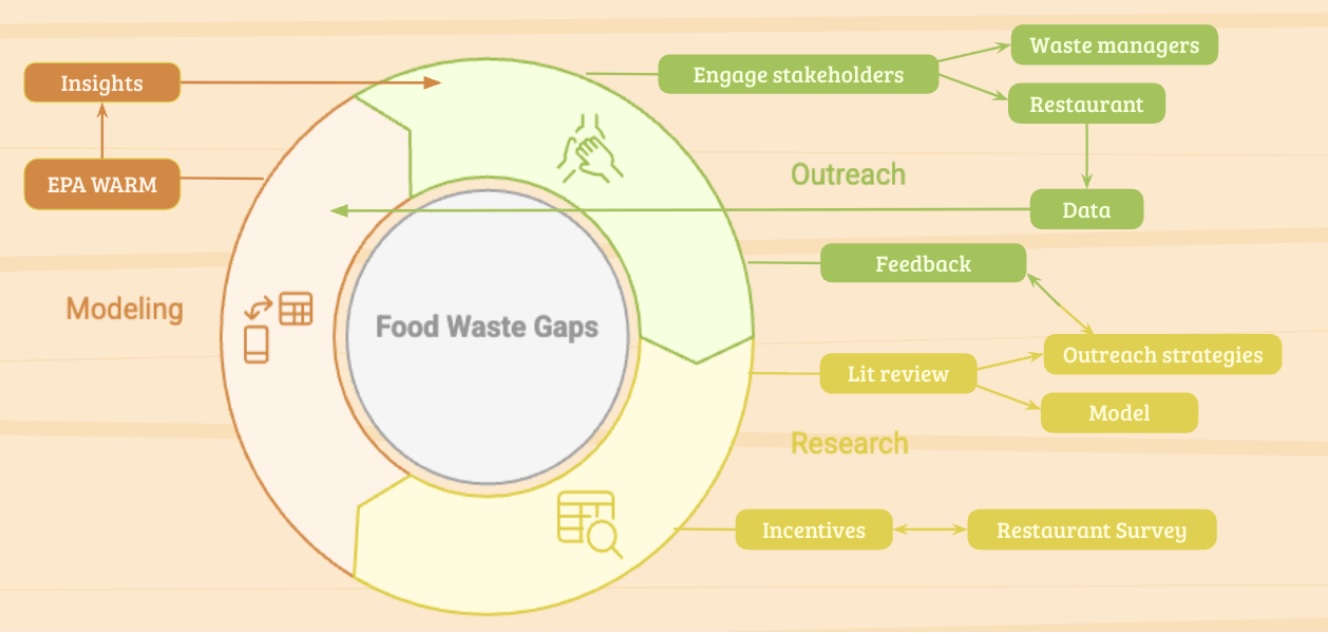
Food Waste Gaps is GreenClub’s newest subteam, officially established in Fall 2025, focused on closing the “last-mile” gaps that cause food waste to end up in landfills. The team works at the intersection of community outreach and technical impact modeling to make sustainable diversion—like composting and food donation—more accessible for local restaurants. By partnering with organizations like Cayuga Compost and Friendship Donations Network, Food Waste Gaps strengthens existing infrastructure instead of reinventing it. The goal is to increase participation in Ithaca’s diversion programs while quantifying real emissions reductions to support stronger outreach and long-term systems change.
Components
This component focuses on strengthening Ithaca’s food waste diversion ecosystem by building relationships with key stakeholders and acting as a connector between waste managers and restaurants. Instead of creating new infrastructure, the team supports existing programs by identifying participation barriers and improving coordination across the network. Through outreach and site visits, Food Waste Gaps gathered operational insights and built early partnerships with organizations like Cayuga Compost and Friendship Donations Network.
This component centers on understanding how food waste flows through the local system and where breakdowns happen—especially at the disposal stage. The team reached out to stakeholders across Ithaca’s donation, composting, and waste management space to map capacity, constraints, and opportunities for collaboration. These conversations helped identify barriers like lack of awareness, misconceptions, and operational limits that prevent restaurants from diverting waste.
This component focuses on quantifying the environmental benefits of diverting food waste away from landfills by translating diversion data into measurable greenhouse gas reductions. Using EPA modeling tools (WARM), the team developed early estimates to support a stronger value pitch for composting and donation programs. These metrics make sustainability outcomes more tangible and persuasive for stakeholders who need evidence to justify operational changes.
This component turns stakeholder insights into resources that make future implementation easier and more repeatable. This semester, the team developed deliverables like a restaurant self-evaluation survey to assess food waste practices, barriers, and diversion potential. Long-term, the goal is to build lightweight tools that standardize data collection and help partners estimate impact more independently.
Contact Us
This organization is a registered student organization of Cornell University and commits to Equal Education and Employment.
Contact Us
info@joingreenclub.com


This organization is a registered student organization of Cornell University and commits to Equal Education and Employment.